
Press Release: Rights of Nature Legislative Package Introduced in Wisconsin
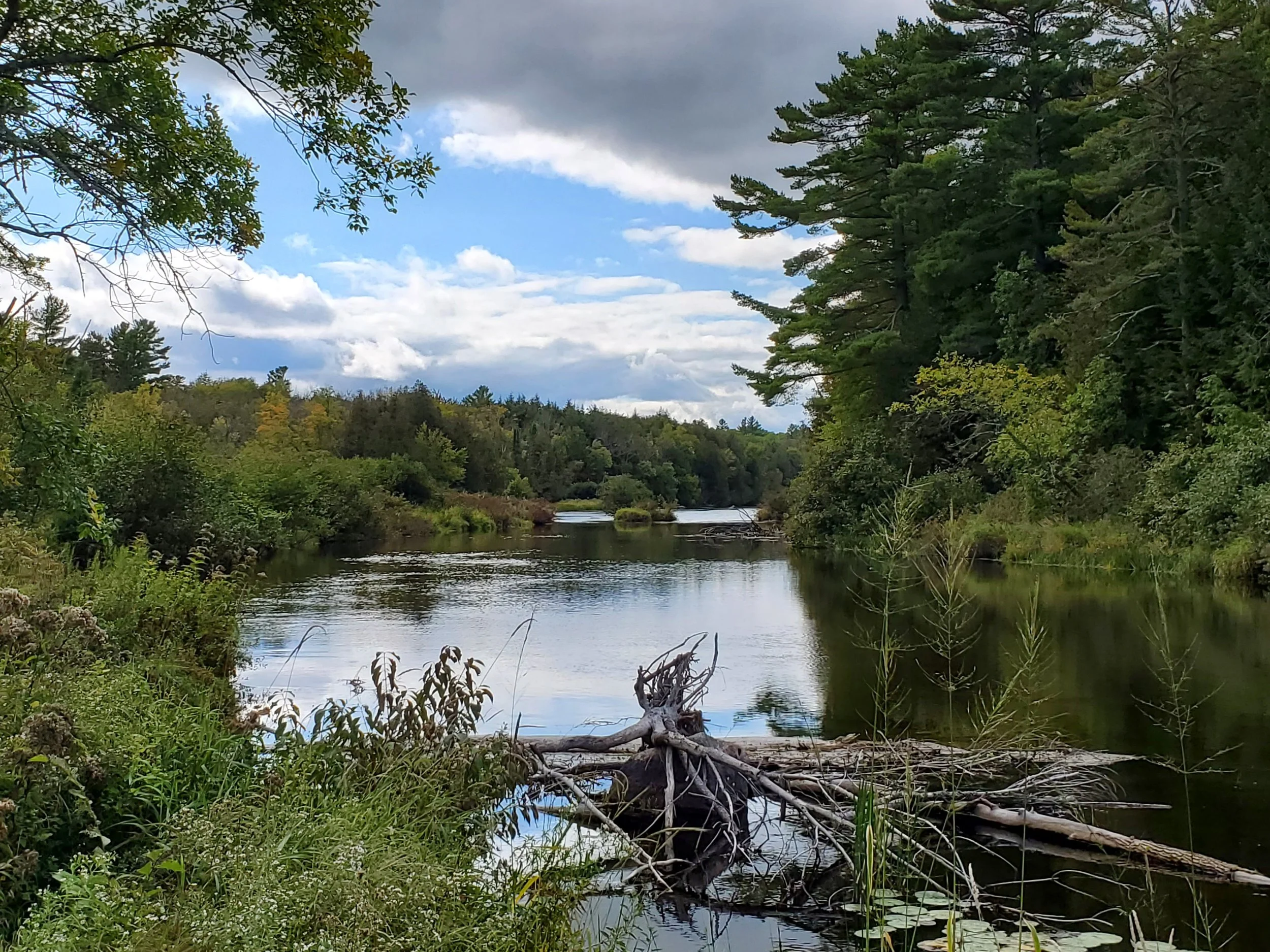
Wolf River, Menominee Reservation, Wisconsin
October 13, 2025
Contact: Mari Margil, mmargil@centerforenvironmentalrights.org
On Indigenous Peoples’ Day, state legislators held a press conference to announce the introduction of the first Rights of Nature legislation in Wisconsin.
State Representatives Vinnie Miresse, Darrin Madison, Angelito Tenorio, and Ryan Clancy spoke of the need for the legislative package to protect the natural environment of Wisconsin. The package contains three parts:
· A bill to recognize the legal rights of Devil’s Lake State Park
· A joint resolution to recognize the Rights of Nature across the State of Wisconsin
· A bill to restore the Prove It First law
Assembly Bill 633 (Senate Bill 613) to recognize the legally enforceable rights of Devil’s Lake State Park would include rights of the park to “naturally exist, flourish, regenerate, and evolve” and “clean, unpolluted water.” Devil’s Lake State Park, the most visited park in the state, is headquartered in Baraboo, Wisconsin, and is located along the Ice Age National Scenic Trail.
The state legislators also announced that they will be introducing a Rights of Nature resolution, Assembly Joint Resolution 114. The resolution calls upon the state to adopt a broader Rights of Nature law, and encourages local governments in Wisconsin to do so as well.
The third element of the legislative package is a bill to restore the state’s Prove It First law. The bill would require – before a new mining permit is issued – that a mining company demonstrate that a similar mine has operated safely for at least ten years, and that a similar mine has been closed for ten years without harming the water table. First adopted in 1997 and signed into law by Republican Governor Tommy Thompson, the law was repealed in 2017 despite a record of protecting the water and environment in Wisconsin.
Working in partnership with Rights of Nature Wisconsin, the interfaith group WISDOM, and the Indigenous organization Menīkānaehkem, the Center for Democratic and Environmental Rights (CDER) assisted legislators in developing the Rights of Nature legislation and resolution. CDER’s founders have assisted in developing the first Rights of Nature laws in the world, including with U.S. communities, in Ecuador’s Constitution, with Tribal Nations, and in other countries.
CDER Executive Director, Mari Margil, stated, “The Rights of Nature legislative package will significantly improve environmental protection in Wisconsin. We congratulate the state legislators and our partners in moving the Rights of Nature forward at a time when others are trying to roll-back environmental protections at the state and federal levels.”
The announcement by legislators builds on efforts by communities across Wisconsin which are considering Rights of Nature policies. Milwaukee County adopted a Rights of Nature resolution in 2023, the first community in the state to do so, with other communities considering taking similar steps.
The introduction of the Rights of Nature legislation also comes as Republican state legislators seek to prohibit local communities from enacting Rights of Nature laws. The preemption legislation would restrict the ability of communities to protect the natural environment.
The press conference may be viewed at this link.
Background on the Rights of Nature
Since 2006, local communities, states, countries, and Tribal and First Nations have established laws and policies, and issued court decisions, which recognize and protect the rights of nature.
This includes national laws in Ecuador (in the 2008 Constitution), Bolivia, Panama, Spain, Uganda, and New Zealand, as well as local laws in the United States, Canada, and Brazil. Tribal nations, including the Rappahannock Tribe, the White Earth Band of Chippewa, the Yurok, and the Menominee, have enacted rights of nature measures. As well, courts in Colombia, Bangladesh, Peru, and India have recognized the rights of rivers and other ecosystems.
These laws, policies, and court decisions, for the first time, recognize nature as a living entity with legal rights. Further, they institute mechanisms for nature itself, as well as people and governments, to enforce and defend these rights on behalf of and in the name of nature.
Click here for more information on the rights of nature, including laws, court rulings, a timeline, and enforcement efforts around the world. #rightsofnature
###