
Press Release: Ecuador Constitutional Court – New Ruling Strengthens the Rights of Nature
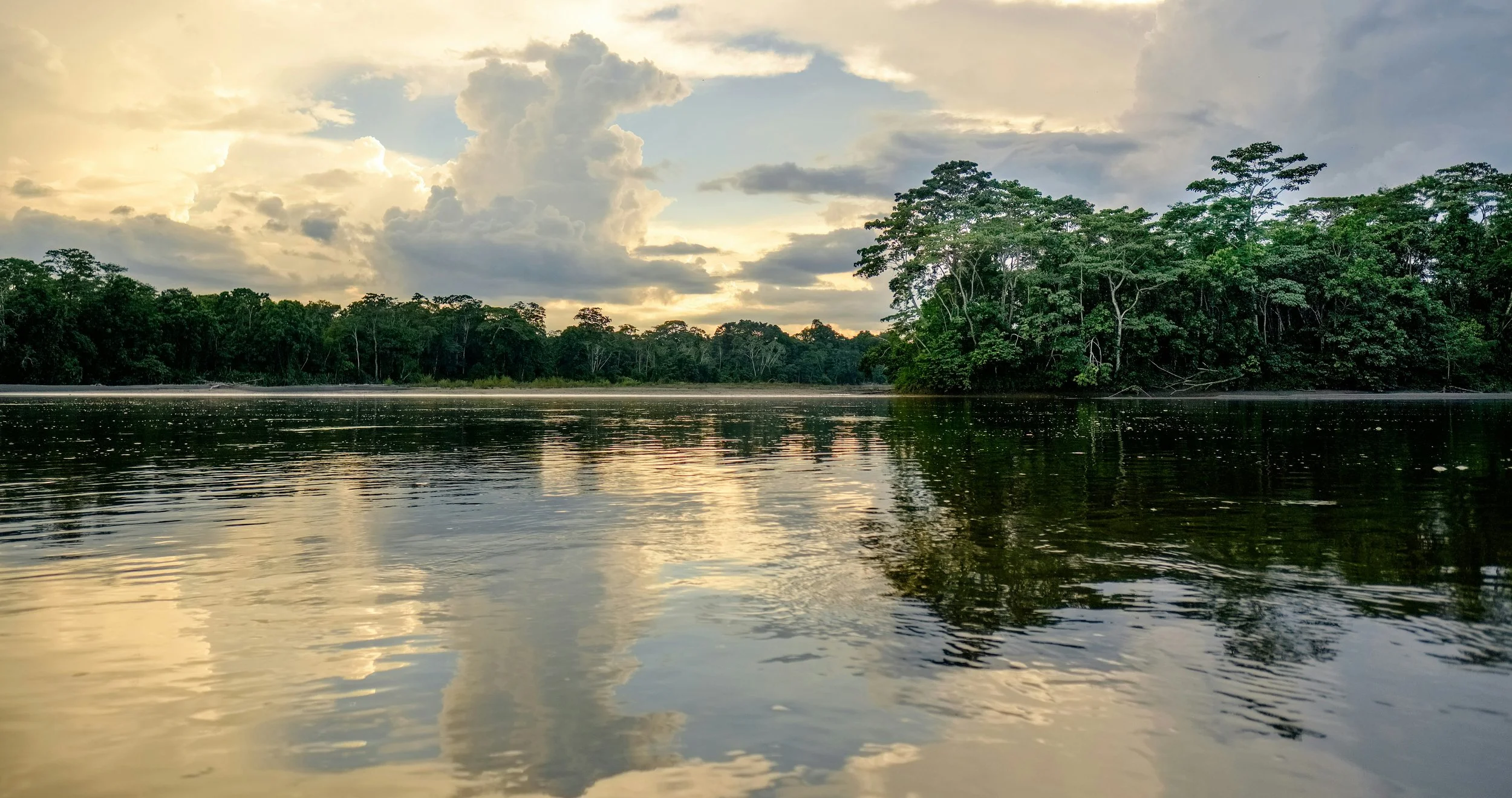
Photo by Alexander Van Steenberge on Unsplash
Court rules on the need to protect the rights of nature in the face of immediate and ongoing violations of rights
Court reinforces the complementarity and interdependence of the human right to a healthy environment and the rights of nature
Court speaks to the broad “standing” allowed under Ecuadorian law to ensure cases can be brought to enforce the rights of nature, especially in the face of ongoing violations of rights
March 4, 2026
Contact:
Hugo Echeverría, Attorney, hugo.echeverria@mail.mcgill.ca
Mari Margil, Executive Director, mmargil@centerforenvironmentalrights.org
In February 2026, the Constitutional Court of Ecuador (Court) issued a new ruling which strengthens the rights of nature through binding jurisprudence.
This is the first ruling issued after the Referendum (Consulta Popular) of November 16, 2025, in which over 60% of Ecuadorian voters chose to keep the 2008 Constitution in force. The 2008 Constitution adopts an ecocentric paradigm and is the first in the world to recognize nature as a rights-holder.
The new ruling – Judgment 27-21-JC/25 – addressed a case whose facts date back to 2020.
On September 30, 2020, there was an uncontrolled emission of hydrocarbon particles (pollution) in the Coca Payamino oil field, located between the Amazon plain and the sub-Andean area of Ecuador. The oil field was operated by Petroecuador, a state-owned oil company. The contamination affected an area of 650 square meters, including adjoining private property.
To apply the remediation measures required by Ecuadorian environmental law and to guarantee nature’s right to restoration, Petroecuador requested authorization from the owner of the private land to enter their property.
The private land owner refused entry, and instead demanded a 'prior assessment' of the environmental damage before environmental clean-up could be done. The owner was concerned that by cleaning up the damage, evidence of it would no longer exist to support ongoing administrative and judicial procedures over the harm for which compensation may be sought. (Constitutional Court of Ecuador. Judgment No. 27-21-JC/25 paras. 7, 9 and 10.)
Unable to access the private land to conduct the clean-up, Petroecuador submitted a petition in court requesting immediate entry to the land and precautionary measures (medidas cautelares): “precautionary measures” is a mechanism provided by Ecuadorian constitutional law to stop violations of rights when they have already occurred and are ongoing.
Faced with this conflict of constitutional rights (property vs. restoration), the Court stated that:
"... Any analysis must be harmonized with the content of the right to private property, which, although recognized and protected, is [also] constitutionally delineated by its social and environmental function. The resolution of the case therefore requires determining how the urgent protection of the environment is compatible with...the property rights of the affected owners..." (Constitutional Court of Ecuador. Judgment No. 27-21-JC/25 para. 38.)
The Court further explained that prohibiting entry to the property "aggravates an ongoing environmental damage [hence] the minimum, reasonable and temporary limitation of the property may be constitutionally admissible as a tool to prevent the deepening of ecological damage and protect the environmental public interest." (Constitutional Court of Ecuador. Judgment No. 27-21-JC/25 para. 151.)
Precautionary measures
In its ruling, the Court highlighted the necessity of precautionary measures – to stop an ongoing violation of rights – in this case, a violation of the rights of nature, explaining:
“… the Court considers that precautionary measures are appropriate in environmental remediation scenarios when the impact is real and remains active with a risk of worsening, the intervention is urgent to avoid irreversible consequences on ecosystems, there is no other effective measure adopted by the competent authority to stop the degradation, and the action requested is suitable and proportionate to make its timely recovery viable. In these cases, the precautionary measure operates as an essential constitutional remedy to guarantee the effectiveness of the rights of nature and the immediate protection of the healthy environment." (Constitutional Court of Ecuador. Judgment 27-21-JC/25, para. 65.)
Complementarity and interdependence: the human right to a healthy environment and the rights of nature
This case also reflects the complementary and interdependent relationship between the human right to a healthy environment and the rights of nature – both rights protected in the Ecuador Constitution.
The Court further explained that “the hydrocarbon spraying event generated real and proven environmental damage, which activates the protection of the constitutional right to live in a healthy environment (art. 66.12 CRE) and the rights of nature.” (Constitutional Court of Ecuador. Judgment 27-21-JC/25, para. 44.)
To guarantee nature’s right of restoration, the Court relied on Environmental Law principles of liability by responsible parties for environmental damage, as well as the need for responsible parties to conduct reparation measures for the purposes of nature restoration. (Constitutional Court of Ecuador. Judgment 27-21-JC/25, paras. 31 and 32.). This shows that the reasoning of the Court relies on an approach that addresses both human (environmental) rights as well as the rights of nature. The Court wrote:
“…the environmental impact resulting from the hydrocarbon spill had not only occurred but continued to occur due to the impossibility of carrying out remediation actions, as the property owner prevented the entry of the personnel responsible for performing the cleaning and ecosystem recovery work. This situation entails a violation of the right to live in a healthy environment and the rights of nature. At the same time, there was a real risk of further aggravation of the ecological damage. Consequently, the request for autonomous precautionary measures was fully within the constitutional grounds provided to prevent the continuation and worsening of environmental impact.” (Constitutional Court of Ecuador. Judgment 27-21-JC/25, para. 60).
The complementarity between human environmental rights and the rights of nature has been identified by Ecuadorian jurisprudence since the 2021 Los Cedros case. And, in 2025, the Inter-American Court of Human Rights said that:
"…the recognition of Nature as a subject of rights does not introduce a content alien to the inter-American corpus juris but represents a contemporary manifestation of the principle of interdependence between human rights and the environment. This interpretation, moreover, is aligned with the advances of international environmental law, which has affirmed structural principles such as intergenerational equity, the precautionary principle and the duty of prevention, all of them aimed at preserving the integrity of ecosystems in the face of current and future threats." (Inter-American Court of Human Rights. Advisory Opinion OC-32/25. para. 282.)
This new ruling, therefore, consolidates the existing perspective of complementarity between human environmental rights and the rights of nature: these are perspectives that reinforce each other. The complementary approach has been advocated by the CDER before the Ecuadorian Constitutional Court, and, also, before the Inter-American Court of Human Rights, through submission of amicus curiae briefs and presenting at court hearings.
Reinforced legal protection for nature
The application of the rights of nature in specific cases has shown the need for reinforced legal protection for different parts of nature, including ecosystems and species. To this end, the Court has already referred to the special protection of specific ecosystems, as occurred in its 2021 mangrove case.
However, it is not until this current ruling that the Court expressly established that the Constitution recognizes all ecosystems as having a "reinforced character of protection." The Court usually uses this concept to highlight the constitutional essence of the rights in conflict. In this case, the Court said:
"Therefore, in view of the reinforced nature of protection that the Constitution recognizes for ecosystems, the judicial action should have reaffirmed the continuity of the precautionary measure as an ideal instrument to make environmental remediation viable and ensure the effective enforcement of the rights of nature, whose protection requires timely, comprehensive responses aimed at stopping the spread of damage." (Constitutional Court of Ecuador. Judgment 27-21-JC/25, para. 74.)
The Court also applied this concept when referring to the risk of contamination of the Añango River, whose channel crosses the affected area of hydrocarbon pollution. It did so referencing the Court’s ruling in the 2022 Aquepi river case:
"The Court verifies that the situation is aggravated considering that the Añango River is part of the polluted area...This Court has recognized that water ecosystems have reinforced protection, due to their essential role in sustaining biodiversity, soil health, and the living conditions of human communities and nature. Thus, the persistence of pollution and the impossibility of carrying out remediation actions not only affect the area of the spill but also put at risk the integrity of an entire interconnected water system, increasing the urgency of immediate intervention to avoid irreversible environmental consequences." (Constitutional Court of Ecuador. Judgment 27-21-JC/25, paras. 61, 62.)
This is also an approach that the CDER has been advocating before the Ecuadorian Constitutional Court. In the 2021 Nangaritza case – on the protection of nature from the threat of mining activities in an area designated by UNESCO as a Biosphere Reserve – the CDER submitted an amicus curiae brief to the Court emphasizing that the rights of nature raise the standards of environmental protection, so the State has a primary duty to protect nature. The Nangaritza case is pending decision.
Broad procedural standing
In this current ruling, the Court also reiterated that procedural standing is broad for the protection of the rights of nature:
"... in judgment 66-15-JC/19, this Court determined that standing in precautionary measures is broad and that "it is irrelevant if it is a natural person (...) or a public servant in the exercise of his or her functions", provided that the purpose of the measure is to prevent or stop a violation of rights. Based on this general rule, this Court considers that when a public entity resorts to constitutional precautionary measures with the immediate purpose of stopping the progression of environmental damage or making its remediation viable, it acts as a guarantor of the rights of nature and the right to live in a healthy environment, so that its active standing in these cases must be recognized. Consequently, this precedent must be extended to situations in which the lack of urgent intervention may aggravate the ecological impact or generate irreversible risks for ecosystems and people, so that the admissibility of the precautionary measure is fully justified in the need to ensure the timely restoration of the environment." (Constitutional Court of Ecuador. Judgment 27-21-JC/25, paras. 56, 57, 58.)
Pro Natura decision
In its ruling, the Court ordered the immediate implementation of precautionary measures, permitting Petroecuador’s entry into the private property for remediation and restoration purposes. Considering the time that has elapsed since the hydrocarbon release (five years), the Court set a period of 60 days for Petroecuador and the national Environmental Ministry to report on the affected area and the progress made.
Further, since the Court declared that its judgment has effects for future analogous cases, it ordered its publication by the national judicial authority, as well as by the organizer of nationwide educational events for judges to learn about the standards of protection for the rights of nature.
In recent years, the Ecuadorian Constitutional Court has been busy addressing matters of national interest, so it has not prioritized the rights of nature. Therefore, this judgment is welcome, since it contributes to the consolidation of the rights of nature in Ecuador, including the procedural aspects that – as observed in this case – are oriented toward an effective application of the rights of nature in specific cases.
The Court ruling, in Spanish, may be accessed here.
The Center for Democratic and Environmental Rights (CDER) partners with and assists communities, Indigenous peoples, governments, and individuals around the world to advance the rights of nature and democratic rights.
###